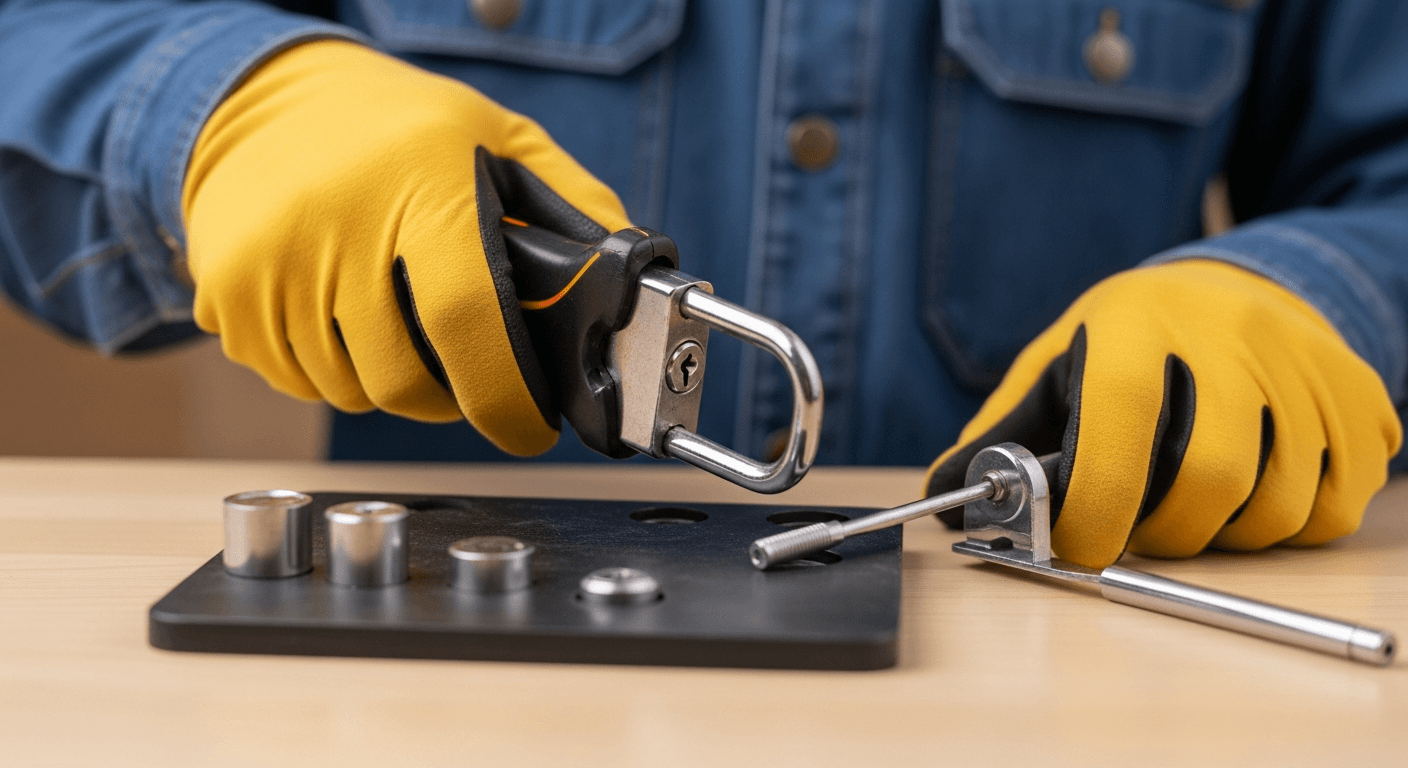
When your car key snaps in the ignition, your smart FOB refuses to start the engine, or you're locked out of your vehicle in a parking lot at midnight, you need fort worth locksmith experts who specialize exclusively in automotive work—not a general locksmith who normally handles door locks and safes. The difference matters. Modern vehicles, especially those manufactured after 2015, use encrypted transponder chips, immobilizer systems, and complex CAN-bus architecture that require OEM-grade programming equipment and automotive-specific expertise. According to AAA research, nearly 4 million drivers nationwide experience car lockouts annually, and replacement costs have escalated as vehicles incorporate increasingly sophisticated anti-theft technology.
This guide explains what automotive locksmith specialists in Fort Worth provide, how modern car key replacement works from a technical standpoint, and what you should expect to pay for services ranging from basic transponder programming to all-keys-lost scenarios for European luxury vehicles. We'll cover mobile fort worth lockout service options, the technology behind key programming, and why automotive-exclusive expertise delivers faster, more reliable results than either general locksmiths or dealership alternatives.
What Makes Automotive Locksmith Specialists Different from General Locksmiths
General locksmiths focus on residential and commercial locks, safes, and door hardware. That's a fundamentally different skill set from automotive key programming. A traditional locksmith carries tools for pin tumbler cylinders, deadbolts, and mechanical lock manipulation—equipment that addresses maybe 10% of modern automotive security systems.
Automotive specialists work in an entirely different technical layer. We maintain dealer-level programming equipment including dedicated transponder cloners, EEPROM programmers, J2534 pass-thru devices, and manufacturer-specific software subscriptions that update monthly as automakers release new encryption protocols. According to Automotive Locksmith Association certification standards, automotive specialists must demonstrate proficiency with at least 15 different key programming methods across multiple vehicle platforms.
The cost structure reflects this specialization. Automotive programming equipment for a single vehicle brand can exceed $15,000 in hardware and software licensing, before factoring in ongoing subscription fees. We live in that layer. That's why fort worth locksmith experts who focus exclusively on automotive work can program a 2023 BMW key in 45 minutes on-site, while a general locksmith would send you to the dealer—or worse, attempt the job without proper tools and leave your vehicle's security system in a fault state.
"Automotive locksmithing requires fundamentally different tools, training, and equipment than residential or commercial work. A locksmith who primarily handles home lockouts will lack the transponder programming capability that 85% of vehicles now require—and attempting the work without proper equipment frequently leaves customers with damaged immobilizer systems that cost more to repair than the original key replacement." — Associated Locksmiths of America Technical Standards Committee
Fort Worth Car Key Replacement: Understanding Your Options and Costs
Fort worth car key replacement breaks down into four service tiers, each determined by your vehicle's security technology and whether you've lost all keys or simply need a spare. Pricing varies based on key type, programming complexity, and whether physical key cutting is required.
Basic Transponder Keys (1998-2010 Vehicles)
Most domestic vehicles and older imports from this era use crypto-1 or crypto-2 transponder chips—relatively simple RFID tokens that communicate with the vehicle's immobilizer via one-way authentication. Programming takes 10-20 minutes using an OBD-II connection. Replacement costs range from $150-$280 including key cutting, chip, and programming. These systems rarely require EEPROM work unless you've lost all keys.
Smart Keys and Proximity FOBs (2008-2024 Vehicles)
Push-to-start systems use bidirectional encrypted communication between the FOB and multiple vehicle modules—typically the body control module (BCM), powertrain control module (PCM), and dedicated gateway modules. According to NHTSA vehicle theft prevention standards, these systems must implement rolling code encryption, which changes the authentication sequence with every use.
Programming requires establishing a secure session with the vehicle's CAN-bus network, entering dealer-level security codes, and synchronizing the new FOB across all relevant modules. This process takes 30-60 minutes and costs $280-$450 depending on the vehicle make. Toyota and Honda smart keys typically fall at the lower end; Ford intelligent access keys and Nissan intelligent keys land mid-range; European luxury vehicles command premium pricing due to proprietary encryption.
European Luxury Vehicle Keys (BMW, Mercedes, Audi, Porsche)
German manufacturers use advanced encryption architectures—BMW's FEM/BDC systems, Mercedes' Keyless Go with NEC+24C64 encryption, and Audi's 4th generation immobilizer with component protection. These systems require brand-specific programming hardware and valid dealer-level security access.
Replacement costs range from $450-$850 for these platforms, reflecting both equipment costs and the 60-90 minute programming time required to authenticate and register keys within the vehicle's security hierarchy. All European manufacturers after 2015 implement encrypted synchronization that prevents aftermarket "clone" keys—you're programming genuine integration, not bypassing security.
All-Keys-Lost Scenarios
When you've lost every key and have no working FOB to clone from, we must access the vehicle's EEPROM memory directly to reset the immobilizer system and program virgin keys. This requires bench work on the relevant module—removing it from the vehicle, connecting it to specialized programmers, reading and modifying the memory chip, then reinstalling and programming new keys. Time investment runs 90-180 minutes; costs range from $450-$1,200 depending on vehicle complexity and whether the module requires disassembly or can be programmed via OBD.
Common Car Key Types and Programming Requirements: Transponder, Smart Keys, and FOBs
Understanding the specific technology in your vehicle determines programming methods and realistic time expectations. Modern vehicles use five distinct key architectures, each with different security layers.
Basic Transponder Chips (Crypto-1, Crypto-2, Megamos)
These passive RFID chips contain no battery—they're energized by the antenna ring around your ignition cylinder. When you insert the key, the ring broadcasts a 125kHz or 134kHz signal that powers the chip. The chip responds with its unique ID code, which the immobilizer compares against authorized IDs stored in memory. Match = engine start. No match = fuel pump and ignition stay disabled.
Most domestic vehicles from 1998-2012 use this architecture. Honda uses a 46 chip across most models; Toyota favors the 4D-67, 4D-68, and 4C chips; GM uses various PK3 and PK3+ systems. Programming these keys takes 10-25 minutes via OBD-II connection using the vehicle's native programming procedure or dealer-level tools that bypass the OBD method.
Rolling Code Remote Head Keys
These combine a transponder chip (for immobilizer authentication) with a remote control (for lock/unlock/trunk/panic functions) in a single integrated unit. The remote portion uses rolling code technology—the FOB and receiver share an algorithm that generates a new unlock code with every button press. Even if someone intercepts the signal, it becomes useless after a single use.
Programming requires separate procedures for the transponder (immobilizer) and remote (receiver) components. Total time runs 15-30 minutes. Common examples include Ford PATS keys, Chrysler FOBIK keys, and Nissan intelligent keys with traditional turn-start ignition.
Smart FOBs and Proximity Keys
These battery-powered transceivers communicate continuously with your vehicle when within 3-5 feet, enabling keyless entry and push-button start. According to Society of Automotive Engineers standards, these systems operate on the 315MHz or 433MHz frequency bands and implement AES-128 encryption or proprietary variants.
The FOB contains a low-frequency (LF) transceiver that listens for polling signals from antennas located in door handles, center console, and trunk, plus a high-frequency (HF) transmitter for sending authentication responses. When you touch the door handle, the vehicle polls for an authorized FOB. If valid credentials are present, doors unlock. When you press the start button, the system verifies FOB presence inside the cabin before enabling the starter.
Programming involves registering the FOB's unique ID with the body control module, gateway module, and engine control unit—a synchronized process that takes 30-60 minutes and requires dealer-level access.
Premium Smart Keys (Comfort Access, Keyless Go, Advanced Key)
European luxury brands implement multi-layer authentication that extends beyond basic FOB registration. BMW's Comfort Access system after 2016 uses the FEM (Footwell Electronics Module) and BDC (Body Domain Controller) architecture, which encrypts FOB communication with vehicle-unique keys derived from the VIN and chassis-specific data. Mercedes' Keyless Go systems implement similar NEC+24C64 encryption that prevents FOB cloning and requires authorized programming equipment with valid dealer subscriptions.
These systems take 60-90 minutes to program because the process involves not just FOB registration, but encrypted synchronization across multiple modules, component protection verification, and in some cases, online authentication with manufacturer servers. You're not bypassing security—you're working within it using legitimate dealer-level credentials.
Switchblade and Flip Keys
This refers to the physical housing style rather than the internal electronics, but it's worth noting because key cutting becomes more complex. Switchblade keys (spring-loaded blade that flips out) and flip keys (manually rotating blade) use non-standard blanks that require specific cutting equipment. The electronics inside can be any of the above types—transponder, rolling code remote, or smart FOB—so programming methods vary accordingly.
The Technology Behind Modern Car Key Programming: Immobilizers, CAN-Bus, and EEPROM
To program keys properly—especially in all-keys-lost situations—you need to understand three core systems that interact in modern vehicles.
Immobilizer Systems: How Authentication Works
Vehicle immobilizers prevent engine start unless a valid authentication credential is present. At the most basic level, this means comparing the transponder chip ID against a whitelist stored in the immobilizer module's memory. Data from the Highway Loss Data Institute shows that immobilizer systems reduce theft rates by 40-50% for vehicles manufactured after implementation.
First-generation immobilizers (1998-2005) used simple fixed-code chips and stored the authorized key list in EEPROM memory within a dedicated immobilizer module. Programming was straightforward: connect via OBD, enter a security code, add the new key ID to the authorized list.
Modern immobilizers (2010-2024) use encrypted challenge-response protocols. The vehicle sends a random challenge code to the FOB. The FOB uses its internal encryption key to process the challenge and generates a response. The vehicle verifies the response using its matching encryption key. Only if the response is valid does the system enable fuel pump and ignition. This happens in milliseconds every time you start your vehicle.
CAN-Bus Architecture: The Vehicle's Nervous System
The Controller Area Network (CAN-bus) is the communication backbone connecting dozens of modules throughout your vehicle—engine control, transmission control, ABS, airbag system, body control, infotainment, and more. According to SAE J1979 standards, automotive diagnostic protocols must provide standardized access to this network for service and programming purposes.
When we program a smart key, we're communicating with multiple modules simultaneously via the CAN-bus: the body control module (to register the FOB for keyless entry), the gateway module (to authenticate our programming session), the engine control module (to authorize engine start), and sometimes additional modules like steering lock or transmission control.
This requires tools that can establish a secure programming session—sending the correct seed-key algorithm to unlock programming mode, then executing the multi-step procedure to register the new key across all relevant modules. This isn't generic locksmith territory. It requires manufacturer-specific software, updated security credentials, and understanding of module interdependencies.
EEPROM Programming: Direct Memory Access
EEPROM (Electrically Erasable Programmable Read-Only Memory) is where immobilizer systems store critical security data: authorized key IDs, security codes, VIN lock status, and component protection data. When you've lost all keys, we must access this memory directly to reset the immobilizer and program new keys from scratch.
This involves three approaches depending on the vehicle:
OBD EEPROM Access: Some vehicles allow direct EEPROM reading and writing via the OBD port using specialized tools. This is fastest when available—30-60 minutes total time. Common on domestic vehicles and Japanese imports through 2018.
Bench Programming: Removing the relevant module (usually the engine control module or body control module), connecting it to an EEPROM programmer on the bench, reading the memory chip, modifying the data to erase old keys and reset the immobilizer, writing the modified data back, reinstalling the module, and programming new keys. Time investment: 90-150 minutes. Required for most European vehicles and newer domestic/import models with encrypted EEPROM.
Chip-Off Method: For modules with encrypted or protected EEPROM that can't be accessed via standard programmers, we must physically desolder the memory chip from the circuit board, read it in a dedicated chip reader, modify the data, write it back to a new chip, and solder it onto the board. This is rare and reserved for extremely high-security vehicles or damaged modules. Time: 180+ minutes.
Fort Worth Lockout Service: Mobile Solutions That Come to You
Vehicle lockouts fall into three categories, each requiring different tools and expertise.
Traditional Door Lock Manipulation
Older vehicles (pre-2005) with traditional mechanical locks can sometimes be opened using air wedges and long-reach tools—creating a small gap at the top of the door frame, then manipulating the internal lock mechanism. This method works when you've locked keys inside a running vehicle or when electronic systems have failed.
We complete these unlocks in 10-20 minutes without damage to weatherstripping, door seals, or paint. This is the one area where general locksmith skills overlap with automotive work, though experience matters—improper technique damages door frames and creates permanent gaps.
Smart Key Lockouts and Dead Batteries
Modern push-to-start vehicles present a unique lockout scenario: if your FOB battery dies while you're away from the vehicle, you can't unlock the doors via proximity detection. Most vehicles provide a hidden mechanical key blade inside the FOB (accessed by pressing a release button or sliding a latch) that operates a keyhole typically hidden in the driver's door handle.
Fort worth lockout service specialists carry replacement batteries for all common FOB types (CR2032, CR2025, CR2016, CR2430) and can replace them on-site in under 5 minutes. We also know the location of hidden mechanical keyways for virtually every make and model—information that isn't obvious to vehicle owners or general locksmiths.
Trunk Lockouts and Child Lock Situations
Keys locked in the trunk require different access methods than door locks. Many vehicles provide trunk release buttons in the cabin, so gaining entry via the door solves the problem. Others require electronic trunk release via a programmed key FOB, making the situation more complex if the only FOB is trapped inside.
We access these vehicles using manufacturer-specific procedures—some allow emergency trunk release via OBD communication, others require removing rear seat backrests to access the trunk from inside the cabin. Time varies from 15-45 minutes depending on vehicle architecture.
All-Keys-Lost Scenarios: How We Program Keys Without an Original
Losing every key to your vehicle creates the most complex programming scenario, but it's completely solvable without dealer involvement in most cases. The challenge is that almost every routine "add a spare" procedure assumes you already have one working key to authenticate the new one. When no working key exists, we can't simply duplicate a credential—we have to convince the vehicle's immobilizer to accept a brand-new key it has never seen before, which means reading and rewriting the security data the car uses to decide what's authorized.
Here's how the process actually unfolds on a Fort Worth service call.
Step 1: Confirm the Vehicle, VIN, and Key Architecture
Before any tools come out, we identify the exact year, make, model, and trim, then decode the VIN to confirm the immobilizer system and key type. A 2014 Toyota Camry and a 2021 Toyota Camry use entirely different security generations, and guessing wrong wastes time. This is also where we confirm the realistic price range, because all-keys-lost work spans roughly $450 to $1,200 depending on whether the vehicle allows OBD programming or requires bench work on a module.
Step 2: Choose the Access Path—OBD or Bench
For many domestic vehicles and Japanese imports through roughly 2018, the immobilizer data is reachable through the OBD-II port. We connect dealer-level tooling, authenticate a secure programming session, erase the lost-key data, and register virgin keys—typically 30 to 60 minutes of work.
Newer vehicles and most European platforms protect that data behind encryption that the OBD port won't expose. For those, we remove the relevant module (commonly the body control module or engine control unit), connect it to an EEPROM programmer on the bench, read the memory, reset the immobilizer state, write the data back, and reinstall the module. The encryption built into systems like BMW's FEM/BDC and Mercedes' Keyless Go is exactly what the Highway Loss Data Institute credits with the meaningful drop in theft rates on equipped vehicles—so the extra effort is the security working as designed, not a flaw.
Step 3: Cut a Mechanical Blade That Matches the Lock
Even on push-to-start vehicles, there is almost always a mechanical key blade hidden inside the fob for the door, and the ignition or door cylinders still have to match. When no key exists, we decode the lock—either by reading the lock wafers directly or by pulling cut codes tied to the VIN—and cut a blade to factory specification. On vehicles that use high-security sidewinder or laser-cut blanks, this requires a dedicated cutting machine, not a hardware-store duplicator.
Step 4: Program and Verify Every New Key
With the immobilizer reset and blades cut, we program the new keys into the vehicle and verify each one independently: engine start, remote lock and unlock, panic, trunk release, and proximity functions where applicable. We always recommend programming at least two keys during an all-keys-lost visit. The bench and decoding labor is the bulk of the cost, so adding a second key at the same appointment is far cheaper than starting over later—and it means a future single lost key becomes a simple, inexpensive add-a-spare instead of another full all-keys-lost job.
Because we perform every step mobile—at your home, workplace, or wherever the vehicle sits—an all-keys-lost situation that the dealer would handle only after a tow and a multi-day wait is usually resolved in a single on-site visit.
The Bottom Line: Why Automotive-Exclusive Expertise Matters
Modern car keys are no longer cut metal—they're encrypted credentials negotiated across multiple vehicle computers. That shift is exactly why automotive-exclusive specialists exist as a distinct trade from general locksmiths. The tools, software subscriptions, and security access required to program a 2023 smart key have almost nothing in common with opening a deadbolt, and attempting the work without the right equipment risks leaving a vehicle's immobilizer in a fault state that costs more to repair than the original key.
The practical takeaways for any Fort Worth driver:
- Match the specialist to the job. For anything involving transponder chips, smart fobs, or programming, an automotive-exclusive locksmith is the right call—not a general locksmith and, in most cases, not the dealer.
- Know your realistic price range. Basic transponder keys run $150–$280, smart fobs $280–$450, European luxury keys $450–$850, and all-keys-lost work $450–$1,200. A reputable provider shares the range up front, before work begins.
- Program a spare while it's cheap. With nearly 4 million drivers experiencing lockouts each year and replacement costs climbing alongside vehicle security, a second key programmed at the same visit is the single best way to avoid a future all-keys-lost bill.
- Mobile beats the tow. A mobile auto locksmith eliminates the tow, the dealership wait, and parts-counter markups—usually delivering a lower total bill on the same day.
Next Steps: Get a Real Answer for Your Vehicle
Every vehicle is different, and the only way to give you an accurate price and time estimate is to know your exact year, make, model, and key situation. If you've lost your keys, locked them in the car, or need a spare programmed, the fastest path to a straight answer is a quick call—we'll confirm what your vehicle needs and dispatch a mobile technician to you. For a deeper look at any single service, explore our guides on car key replacement, key fob programming, and 24-hour emergency locksmith service.
Frequently Asked Questions
Can you make a car key if I've lost all of my keys?
Yes. All-keys-lost work is one of our core services. Because there's no original key to copy, we access the vehicle's immobilizer—either through the OBD-II port or by removing and bench-programming the relevant module—to reset its security data and register brand-new keys, then cut a mechanical blade to match your lock. Most all-keys-lost jobs are completed on-site in a single visit, and typically cost between $450 and $1,200 depending on whether your vehicle allows OBD programming or requires bench work.
How much does car key replacement cost in Fort Worth?
It depends on your vehicle's key technology. Basic transponder keys for 1998–2010 vehicles run roughly $150–$280; smart proximity fobs for push-to-start vehicles run $280–$450; European luxury keys (BMW, Mercedes, Audi, Porsche) run $450–$850; and all-keys-lost scenarios range from $450–$1,200. We confirm the relevant range for your specific year, make, and model before any work begins.
Is a mobile locksmith cheaper than the dealership?
For most modern vehicles, yes. A mobile automotive locksmith eliminates the tow bill, the multi-day dealership wait, and parts-counter markups. We program genuine, securely integrated keys using dealer-level tools and credentials—you get the same working result, typically at a lower total cost and on the same day, at your location.
How long does key programming take?
Time varies by key architecture. Basic transponder keys program in 10–25 minutes, rolling-code remote head keys in 15–30 minutes, and smart fobs in 30–60 minutes because the fob must be registered across the body control, gateway, and engine modules. Premium European smart keys take 60–90 minutes due to encrypted synchronization, and all-keys-lost jobs that require bench work can run 90–180 minutes.
Can you program key fobs for push-to-start vehicles?
Yes. We supply and program smart proximity fobs across most makes and models—including Toyota Smart Key, Honda Smart Entry, Ford Intelligent Access, Nissan Intelligent Key, and the German luxury systems like BMW Comfort Access and Mercedes Keyless Go. Programming registers the fob's unique ID across all relevant vehicle modules so keyless entry and push-button start work exactly as they did from the factory.
What should I do if I locked my keys in the car?
Stay with the vehicle in a safe spot and check for an open window or a remote-unlock app such as OnStar or FordPass. If your fob battery died, look for the hidden mechanical blade inside the fob and the matching keyhole on the driver's door. Then call a mobile auto locksmith for fast, damage-free entry. If a child or pet is locked inside, call 911 first—an emergency unlock takes priority over everything else.
Locked out or need a key now?
Mobile auto locksmith service across Fort Worth and the surrounding metroplex. We come to you — 24/7.
Call 817-674-2304